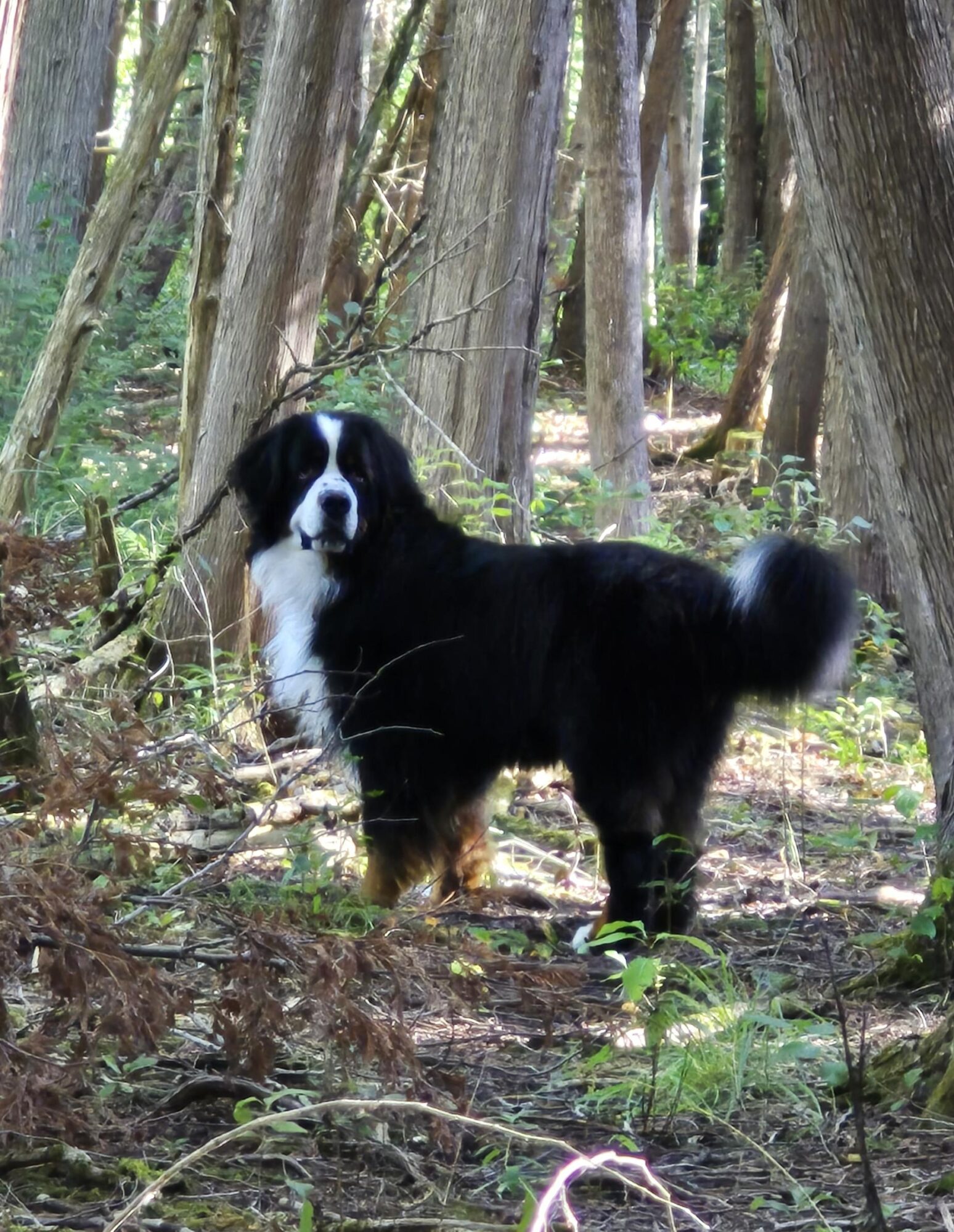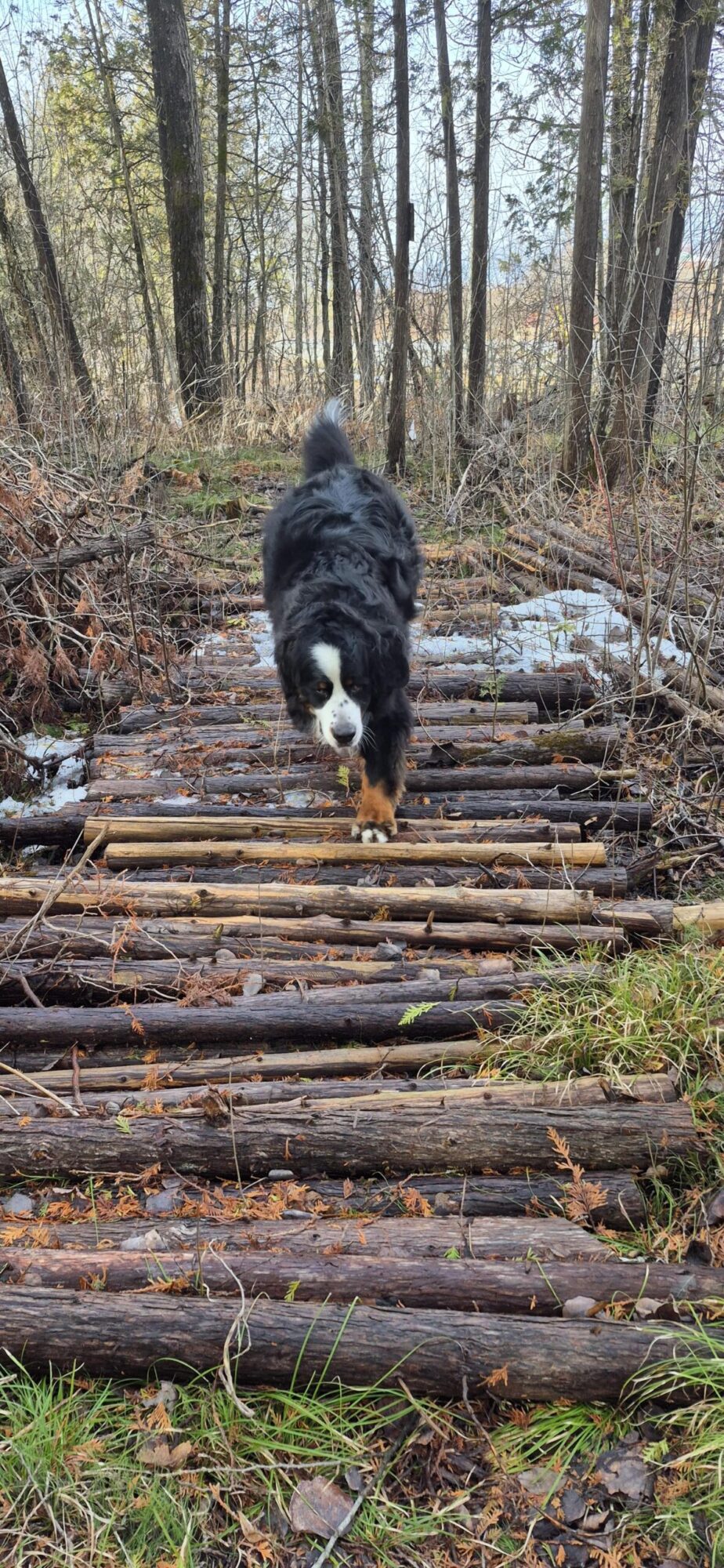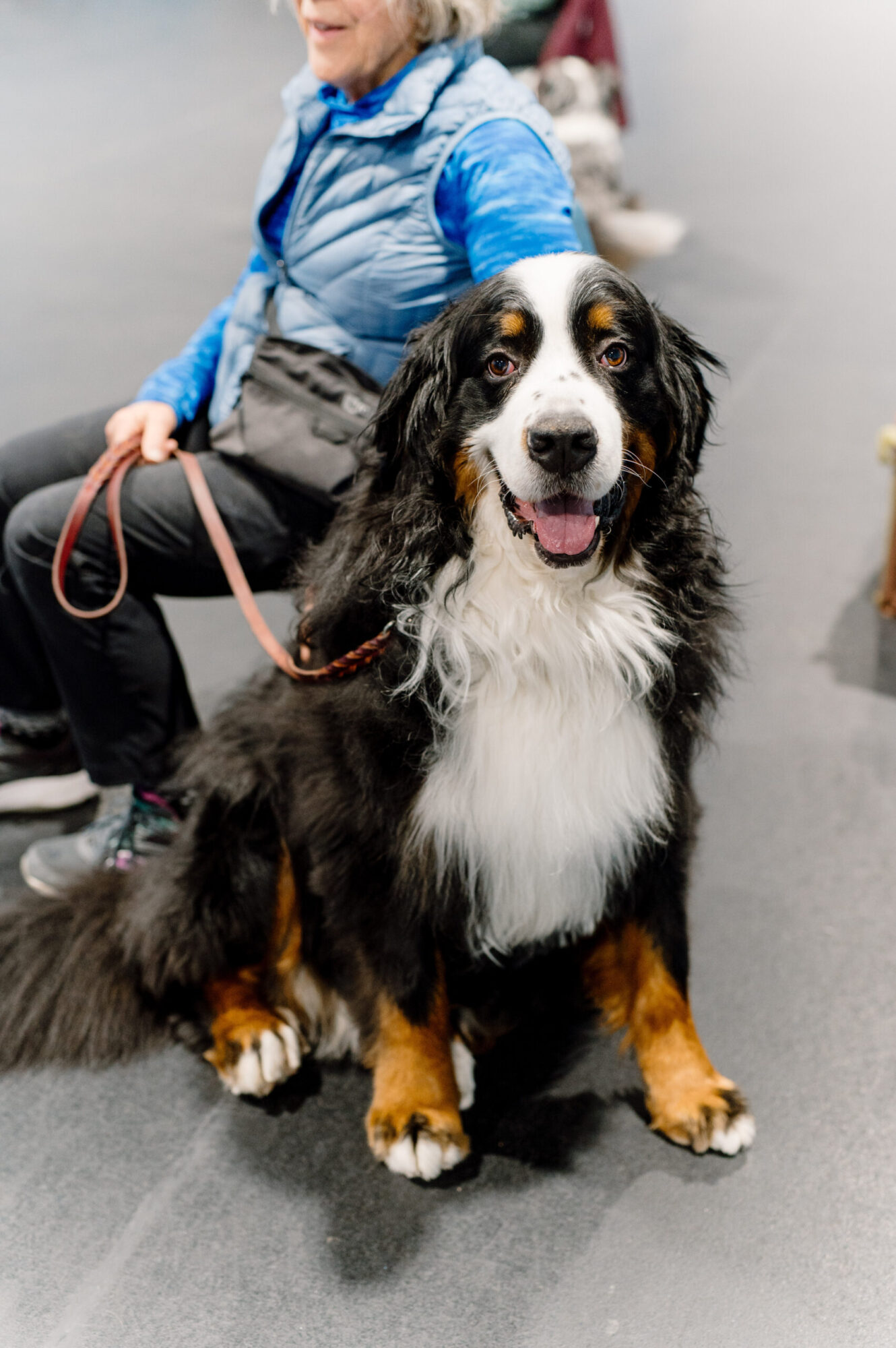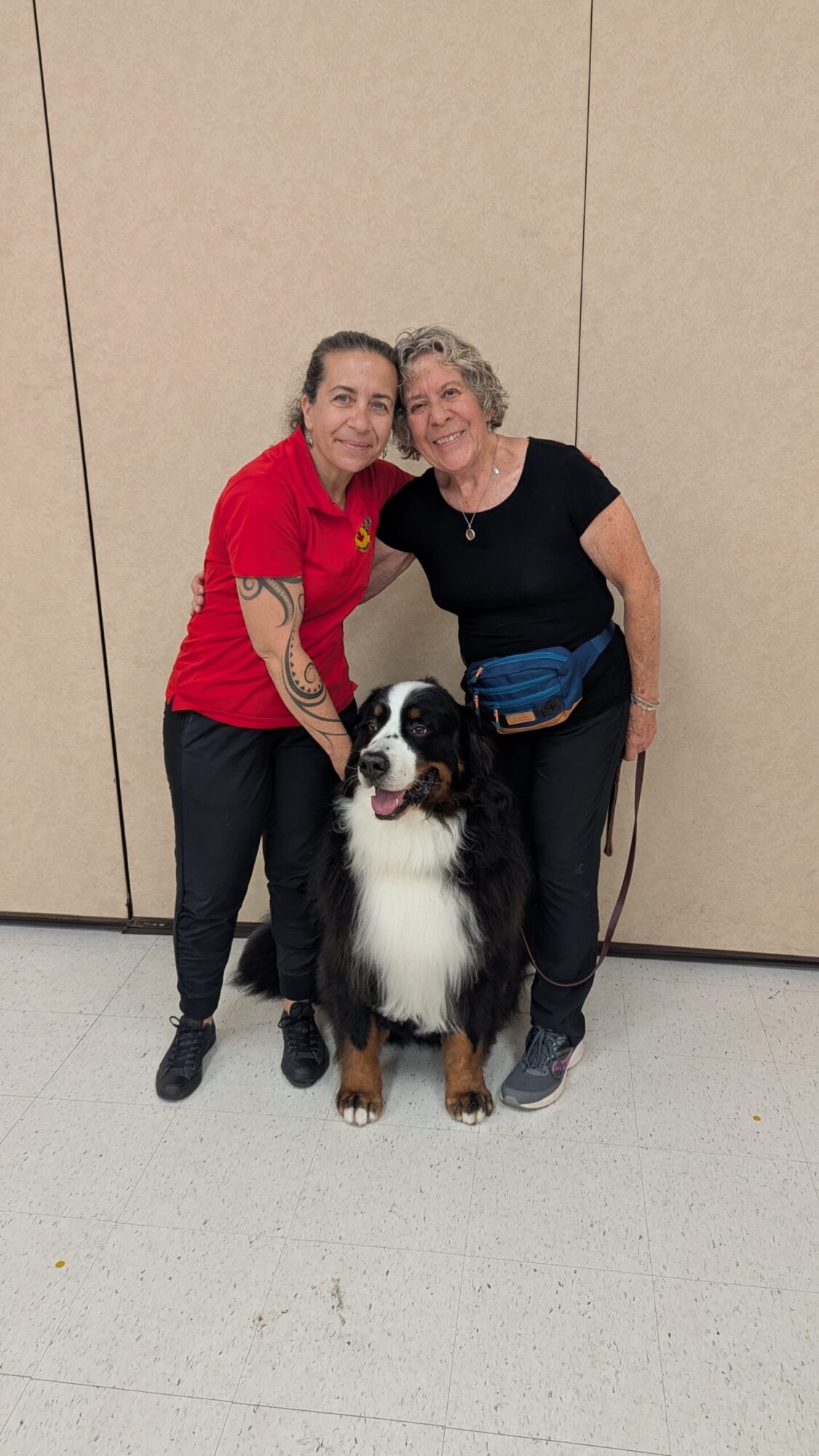
Our client Irene came to us with a Bernese Mountain Dog named Kobe, and the weight of watching a dog she loved deeply struggle in ways she couldn’t reach.
Kobe presented with fear, insecurity, and significant sound sensitivity. Everyday noises that most dogs register and move past would send him into visible distress. Fire crackles, lawn mowers, and similar sounds triggered panic: fleeing, panting, drooling, a body overwhelmed by something it couldn’t process. More unsettling still, he would freeze and refuse to move even in familiar situations he had previously enjoyed, including his regular swimming appointments. For a dog with Kobe’s physical presence and breed capability, the gap between what he looked like and how he felt inside was stark and heartbreaking to witness.
Kobe’s history helped explain what Irene was seeing. He had been acquired from a reputable breeder in Brazil and had moved to Canada with his original family. When that family went through a separation, keeping him was no longer possible. His breeder would have gladly taken him back, but returning him to Brazil was not feasible, and a local Bernese Mountain Dog rescue became the right path forward. It wasn’t long before Irene applied to adopt him.
She was no stranger to the breed. A seasoned Bernese owner who had recently lost her beloved dog Ben, Irene understood these dogs at a level that goes beyond reading and research. She knew their sensitivity, their loyalty, and the depth of what they can give. She opened her home and her heart to Kobe without hesitation. But his fears made it hard for them to move forward together as a new team, and she found herself heartbroken to see so much struggle in a dog who deserved so much more.
When I first met Irene, we connected immediately. We shared an honest conversation about the losses we had each experienced, and something about that exchange established a foundation of trust from the very beginning. Irene had already begun reading The Way of Life Method before reaching out, and because the approach resonated so clearly with the way she already understood dogs and relationships, she joined the Way of Life Method Academy and began applying the Method with steady and sincere commitment.
What followed was not a dramatic or rapid transformation. It rarely is. What happened instead was the kind of change that accumulates quietly, built from the daily decisions Irene made about how she lived with Kobe, how she structured his world, and how she responded when his fears arose. She never once argued or second-guessed what we advised. She took it in, applied it, and returned with questions that showed she had actually done the work. That kind of client is rare. It is also the kind of client whose dogs change in ways that are hard to explain to people who haven’t seen the Method at work.
Less than a year later, the changes in Kobe are remarkable.
As a therapy dog handler myself, I volunteered to be present at the evaluation hosted by Therapeutic Paws of Canada, both to serve the organization and to be there for Irene and Kobe at a moment that carried real significance. Before the evaluation began, we told Irene honestly that if Kobe did not pass every component, it would not mean he was incapable. It would simply mean there were things to keep working on.
Kobe went on to pass every component with flying colours.
There was not a single moment of fear, hesitation, or uncertainty. He was examined and touched by multiple people, approached by crutches and wheelchairs, walked past dogs and strangers, and guided near an appetising plate of cookies, all without losing focus on the person beside him. What he demonstrated was not performance. It was trust. A dog who had once frozen in familiar surroundings was now moving through an unfamiliar, demanding environment with calm and noble confidence, looking to his handler and finding everything he needed there.
It was Irene’s composure, however, that brought me to tears more than once during the evaluation. She moved through every component collected, dignified, and certain. She carried herself as someone who knew the dog she had raised and who had earned the right to stand beside him with that kind of confidence. She was, in every meaningful sense, a Way of Lifer.
Kobe and Irene are now completing their supervised visits before being cleared to work independently as a certified therapy dog team. In six months, Kobe will complete his evaluation with children, and we have every reason to believe he will pass that too.
His story is a reminder that the most important transformations in a dog’s life are rarely sudden. They are built carefully, one day at a time, by people who refuse to stop believing in the dog in front of them, even when that dog makes it hard to do so. Irene never stopped believing in Kobe. And because she didn’t, both of them found their way to something neither could have reached alone.